Why "No Prep Needed" Is an Engineering Challenge, Not Just a Marketing Claim
The no prep needed promise of a Cold Sandwich Bagel is deceptively simple from the consumer's perspective but represents a significant product engineering commitment from the manufacturer's side. Delivering a ready-to-eat bagel sandwich that requires zero reheating, zero assembly, and zero additional handling means that every quality parameter — crumb texture, filling freshness, moisture balance, and flavor profile — must be optimized for consumption at refrigeration temperature (2–8°C), not at the elevated temperatures at which most baked goods are designed to perform. Bread crumb structure, in particular, behaves very differently when cold: starch retrogradation accelerates rapidly below 10°C, causing crumb firming that can make a bagel that was pleasantly chewy when warm feel dense and starchy when consumed cold. This is why a Cold Sandwich Bagel cannot simply be a regular bagel assembled with fillings and chilled — the base bagel formula must be specifically engineered with higher moisture retention, a modified starch profile, and fat content calibrated to retard retrogradation and maintain acceptable crumb softness across the intended refrigerated shelf life. At Jiangsu Goobagel Food Technology Co., Ltd., bagel base development for cold sandwich applications uses texture analyzer crumb firmness measurements at refrigeration temperature as the primary quality benchmark, distinct from the ambient-temperature firmness standards applied to standard frozen bagel SKUs — a formulation discipline that separates a genuinely no-prep-ready product from a chilled version of a product designed for another consumption context.
Starch Retrogradation Management in Refrigerated Bagel Products
Starch retrogradation is the dominant texture degradation mechanism in any chilled bread product, and it poses a particularly acute challenge for a Cold Sandwich Bagel because the product is designed to be consumed without toasting or reheating — the conventional consumer workaround for stale crumb texture. During baking, starch granules gelatinize and form an amorphous gel structure that produces a soft, pliable crumb. Upon cooling, amylose chains begin to recrystallize rapidly within the first 24 hours, while amylopectin recrystallization continues more slowly over days — both processes progressively stiffen the crumb. The rate is temperature-dependent, peaking in the range of 0–5°C, which happens to coincide exactly with standard refrigerated retail display conditions. Several formulation strategies are available to retard this process, each with different efficacy and label implications. Emulsifiers such as DATEM (diacetyl tartaric acid ester of mono- and diglycerides) and SSL (sodium stearoyl lactylate) complex with amylose chains and physically impede recrystallization, extending soft crumb shelf life by 2–4 days. Hydroxypropyl methylcellulose (HPMC) functions similarly through a different mechanism. Enzyme-based approaches using amylase variants (particularly maltogenic amylase) modify the starch chain length distribution during baking, reducing the recrystallization tendency without adding emulsifier declarations to the label — a significant advantage for grab & go products targeting clean-label retail channels. Goobagel Food evaluates each of these interventions in the context of the specific bagel formula and target shelf life before specifying the anti-staling system for each Cold Sandwich Bagel SKU, balancing technical efficacy, regulatory compliance, and label positioning requirements.
Filling System Design for Refrigerated Sandwich Stability
The filling components of a Cold Sandwich Bagel must perform very differently from fillings designed for immediate service or hot-hold applications — they need to remain visually fresh, texturally intact, and microbiologically safe across a refrigerated shelf life of typically 5–10 days without any consumer preparation step. This imposes specific technical requirements on each filling category:
| Filling Category |
Key Stability Challenge |
Technical Intervention |
Shelf Life Impact |
| Cream cheese / soft cheese |
Syneresis and surface weeping at cold interface |
Stabilizer-optimized formula; higher fat content; pH control |
7–10 days with proper stabilizer system |
| Cured / deli meats |
Surface oxidation; color browning; moisture loss at cut edges |
MAP packaging; modified atmosphere flush at assembly; antioxidant marinade |
5–8 days; highly dependent on packaging O₂ barrier |
| Egg-based fillings |
Protein weeping; rubbery texture development at refrigeration temperature |
Starch addition to bind free water; formulation for cold-eat texture |
3–5 days; shorter shelf life than cheese-based fillings |
| Vegetable components |
Cell wall softening; moisture migration into bread; browning of cut surfaces |
Physical barrier layer (lettuce shield); acidulant dip for cut surfaces; low-moisture varieties preferred |
3–4 days; typically the shelf life-limiting component |
Moisture Migration Between Filling and Bread: The Primary Texture Failure Mode
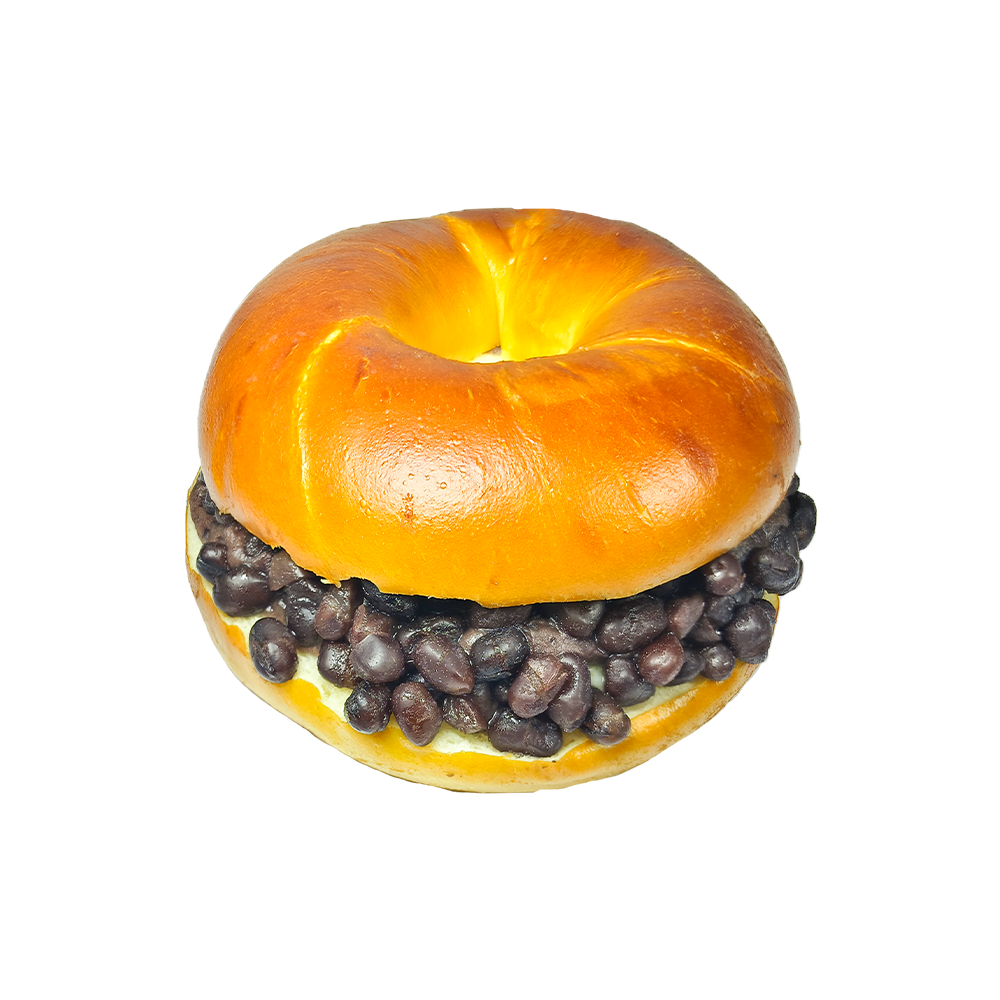
In any assembled cold sandwich product, moisture migration from filling to bread is the most common cause of premature texture degradation, and it is particularly acute in a Cold Sandwich Bagel because the dense crumb structure of a classic bagel — while advantageous for structural support — creates a tighter capillary network that draws moisture from wet fillings more aggressively than an open, airy bread crumb would. The driving force is water activity differential: fillings with higher free moisture (Aw above 0.96) will inevitably transfer moisture to bread crumb operating at a lower equilibrium water activity, regardless of storage temperature. The practical consequence is a soggy interface layer between filling and crumb that progressively thickens over the refrigerated shelf life, turning what should be a texturally defined grab & go eating experience into a wet, indistinct mouthfeel. Managing this requires intervention at multiple levels simultaneously. A fat-based moisture barrier — applied as a thin layer of cream cheese, butter, or oil-emulsion coat on the cut bagel surface before filling assembly — significantly reduces the rate of moisture transfer by physically displacing the aqueous interface. Filling formulation adjustments to reduce Aw (through salt, sugar, or starch additions that bind free water) address the driving force directly. Modified atmosphere packaging that controls the humidity microenvironment within the pack provides a third layer of protection. Jiangsu Goobagel Food Technology Co., Ltd. engineers moisture migration control into the Cold Sandwich Bagel assembly specification rather than treating it as a post-production shelf-life problem, defining the barrier application method, filling Aw targets, and packaging atmosphere parameters together as a unified system at the product development stage.
Grab & Go Packaging: How Structural and Atmospheric Design Protect Product Integrity
Packaging for a grab & go Cold Sandwich Bagel serves functions well beyond simple containment — it must maintain the modified atmosphere around oxygen-sensitive fillings, provide structural support to prevent crumb compression during stacking and transit, communicate the no prep needed usage occasion clearly, and deliver a consumer opening experience that feels premium rather than utilitarian. Each of these requirements imposes specific engineering constraints that must be resolved at the packaging specification stage. Structural rigidity is particularly important: a bagel sandwich packaged in a fully flexible film pouch is vulnerable to compression during retail display stacking, which can flatten the crumb, squeeze filling to the edges, and create an unappetizing cross-section when opened. Rigid-base or semi-rigid tray formats with film lidding maintain internal volume and protect the sandwich geometry throughout the cold chain. MAP (modified atmosphere packaging) with a gas flush of typically 30–40% CO₂ and 60–70% N₂ suppresses both aerobic bacterial growth and oxidative color degradation in meat-containing fillings, extending effective shelf life by 2–4 days compared to air-packed equivalents without altering flavor. From a consumer communication standpoint, the packaging must make the grab & go and no prep needed proposition legible at a glance — this means front-of-pack consumption occasion icons, clearly visible fillings through window film, and an easy-open mechanism that does not require scissors or struggle, all of which are increasingly specified as non-negotiable requirements by retail and café chain clients working with Jiangsu Goobagel Food Technology Co., Ltd. on Cold Sandwich Bagel product development.
Channel-Specific Requirements for Cold Sandwich Bagel Distribution and Display
The commercial viability of a grab & go Cold Sandwich Bagel is heavily dependent on matching the product's shelf life, packaging format, and price positioning to the specific operational realities of each distribution channel. Unlike frozen bagels, which tolerate long cold chain timelines and can be held in inventory for weeks, a chilled sandwich product operates on a much tighter logistical clock that must be factored into the supply chain design from the outset. As an OEM Classic Bagel Factory with nationwide distribution infrastructure, Jiangsu Goobagel Food Technology Co., Ltd. structures Cold Sandwich Bagel supply programs differently by channel to reflect these realities:
- Convenience retail and petrol forecourt: Requires the longest effective shelf life (7–10 days) due to multi-tier distribution networks and variable store replenishment frequencies. MAP packaging is non-negotiable; fillings must be selected for maximum stability. High-visibility individual packaging with clear consumption occasion labeling drives impulse purchase from time-pressed consumers for whom no prep needed is the primary purchase driver.
- Café chains and tea brand outlets: Shorter shelf life is acceptable (3–5 days) due to direct daily delivery models. Premium fillings with fresh-forward flavor profiles are prioritized over longevity. Display case format requires structural packaging that maintains sandwich geometry under open-refrigerator conditions. The grab & go positioning is reinforced through branded packaging aligned with the outlet's own visual identity — a customization capability that Goobagel Food's Supply Custom Classic Bagel service accommodates.
- Office and corporate catering: High-volume, predictable ordering patterns; bulk outer packaging preferred over individual retail packs. Shelf life of 5–7 days aligns with weekly delivery cycles. Variety pack formats (multiple filling variants per order) are commercially attractive for catering operators serving diverse consumer preferences within a single workplace.
- E-commerce and cold-chain delivery platforms: The fastest-growing channel for premium chilled food products in China; requires packaging robust enough to survive courier handling without cold chain precision guarantees. Insulated secondary packaging with gel ice inclusion is standard. Consumer communication about the no prep needed consumption occasion must be explicit on the e-commerce product listing page as well as on the physical pack, since online shoppers cannot examine the product before purchase.

 中文简体
中文简体